Project Jatropha


 Trust. Collaboration. Action.

 United against environmental destruction and poverty, we stand.


Home

In rural south India, poverty and environmental destruction plague the land and people. Dependent mainly on tobacco farming, poor farmers can scarcely make a living that can support their families. An unfortunate consequence of their cultivation of tobacco is the destruction of trees in the Nagarahole (Rajiv Gandhi) National Park, an animal refuge. Thus, we present Project Jatropha, an environmentally and economically viable project that aims to simultaneously save the environment and boost the rural Indian economy.

The Current State of Affairs in India

A significant number of small farmers in the villages of Hunsur Taluk, Mysore, Southern Karnataka state, make a living by growing tobacco that they export.  To most subsistence farmers this is the only crop that brings in some money. The raw tobacco leaves are processed in barns using firewood, which is scarce. The villagers are forced to cut down trees to fuel the curing of tobacco. The destruction of forest is harming regional biodiversity: for example, the agents who supply firewood for villagers are infringing on the boundaries of the Nagarahole (Rajiv Gandhi) National Park, which is a wild animal sanctuary. Consequently, human-animal conflicts have started to become much more common and dangerous. The Indian government recently signed the Framework Convention on Tobacco Control, and will aim to cut down tobacco cultivation by half by the year 2020. (Article from 10/11/2008, The Hindu Newspaper) The Indian government is trying to wean the farmers away from growing tobacco by offering a compensation packages. However, this solution will not be sufficient, as the money would run out soon, if no alternative commercial crops are available.


 What exactly is Jatropha curcas?


Jatropha curcas is a small, perennial shrub that grows 3-5 meters in height. It was originally native to Central America, and grows well in the tropics. It has many uses, among them biofuel, cosmetics, and fertilizer.


 Why use Jatropha?


Jatropha curcas produces seed that contain an inedible vegetable oil that is used to produce biofuel. Each Jatropha seed produces between 35 to 37% of its mass in oil.

• It is drought resistant.
• It can be grown almost anywhere - even in sandy, saline, or infertile soil.
• It adapts well to marginal soils with low nutrient content.
• It is relatively easy to propagate.
• It is not invasive or damaging.
• It is capable of stabilizing sand dunes, acting as a windbreak or combating desertification.
• It naturally repels insects and animals do not browse it.
• It lives for over 50 years producing seeds all the time.
• It is resilient against the cold.
• It does not exhaust the nutrients in the land; rather, it rejuvenates overused land.                                                                  

• It does not require expensive crop rotation.
• It does not require fertilizers.
• It grows quickly and establishes itself easily.
• It has a high yield.
• No displacement of food crops is necessary.
• The biodiesel byproduct, glycerin, is profitable in itself.
• The waste plant mass after oil extraction can be used as a fertilizer.
• The plant itself recycles 100% of the CO2 emissions produced by burning the biodiesel; two mature plants can absorb 1 metric ton of carbon every year.

In his book, Hot, Flat, and Crowded, Pulitzer Prize Winning Author Thomas L. Friedman gives 4 criterion that any biofuel must meet: It must have a large positive energy input, not destroy biodiversity-rich land, must not release large amounts of carbon dioxide when grown, and must not solve one problem only to create another. Jatropha meets all of these criterion.


Plan and Execution
 

Our Jatropha project differs from the ones that are currently in place. The project that we have undertaken starts at the grassroots level. Our “Project Jatropha” mission has two collaborators:  Parivarthana and Labland Biotechs. Parivarthana is a non-governmental organization which is involved in rural poverty alleviation, environmental protection, and sustainable rural development. It is located at Hunsur Taluk, Mysore District, Karnataka State. Labland Biotechs is a plant biotechnology company located in Mysore. It has a modern biotechnology lab and a modern green house for mass multiplication of different plants, including Jatropha curcas. This is a cooperative mission between these collaborators. We are the facilitators, the catalysts, who brought the different groups together. The beneficiaries are farmers and women’s self help groups (SHGs).
Women’s SHGs are composed of the women in the village, who had banded together and pooled their money into one account. This group then lends out money to its members at rates that are far lower than the ones local moneylenders charged. The women in the group are able to save more money this way, but are still entrenched in poverty. The project’s main goal is to enable these farmers to grow Jatropha either as a hedge plant or as an intercrop on a scale that would be economically viable.


What have we done so far?


Phase I (Accomplished)

The actual project planning began in December 2007

-Established a collaboration by convincing Parivarthana and Labland Biotechs to be integral parts of our project                                                                   
-Under the leadership of Mr. Rajegowda, the team visited several villages near Hunsur to meet with individual farmers and women’s self help groups


-Convinced 5 self help group leaders to participate in our project

-Purchased 1000 seedlings from Labland Biotechs at a discount price of 6 rupees ($0.12)/seedling

-With the help of Parivarthana, the team distributed the seedlings to the 5 self help group leaders 

-Sent field workers of Parivarthana and farmer leaders to Labland Biotechs for training on the agronomic practices of Jatropha cultivation.

In our recent trip… 

-Organized a Labland Biotechs facility tour for farmers and SHG members from three different villages

-Demonstrated biofuel extraction and conversion into biodiesel of 100 kg of dried Jatropha seeds

-Took farmers to Labland's farm to see trial Jatropha plantation

-Distributed biofuel to Parivarthana to be given to SHG's

-Conducted a Q&A Session between botanists, plant pathologists of Labland Biotechs, Project Jatropha team leaders, a biodiesel consultant and the farmers

-Revisited two villages: Kirijagi and Thipalapura


-Met with hundreds of farmers and self-help group members, explained our mission to them, and convinced more than 50 of them to be in our project

-Conducted interviews with Mr. Rajegowda, secretary of Parivarthana,Dr. Sudheer Shetty and Dr. Geetaa Singh, Mr. Gopalakrishnan of Labland Biotechs to discuss feasibility of Phase II of the  project

-Visited the fields of farmers doing our project (Project Site); showed said fields to other interested SHG members

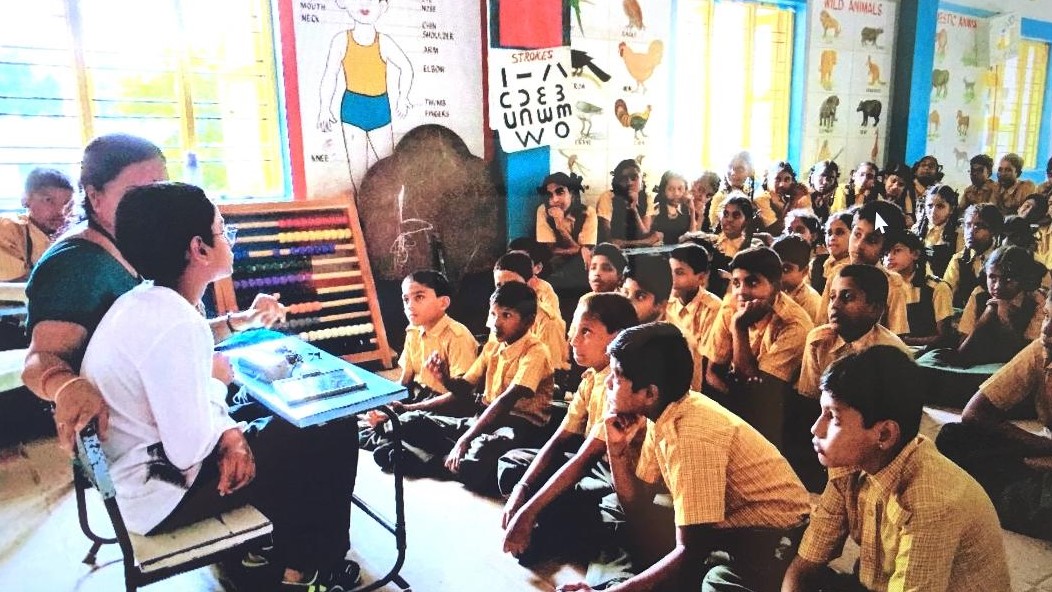
-Visited Tattekere and Shastri high schools in Hunsur area; explained our mission to them and Shastri high school agreed to collaborate

-Held a large press conference in Mysore and a International Rotary Club presentation in Hunsur

-Visited Central Tobacco Research Institute and presented our project to the principal scientist and head of plant pathology Dr. M. M. Shenoi, who approved the project plan of Phase II.

-Met S. Gopalakrishnan, an All India Biodiesel Consultant who demonstrated the entire extraction and conversion of Jatropha oil at Labland Biotechs and explained the advantages of Jatropha as a biofuel to the farmers.

-The farmers used the extracted oil in their irrigation pumps and have given very positive feedback.

In a farmer's own words, 

"Smoke emission is very less compared to regular diesel. The smoke smells pleasant. The pump set ran smoothly and efficiently."

 Demonstration of successful usage of the extracted biofuel

This marks the completion of Phase I of Project Jatropha. For Phase II, Callie Roberts, who is also an environmental enthusiast, has joined our group. She has contacted local middle schools for fund raising and collaboration purposes. To do so, she has done a write up of the project and took a leadership role in making this website.


 Phase II (In Progress)

-We have chosen more than 50 self help group members to participate in the project from two villages.

-We have made financial arrangements to purchase 10,000 high quality Jatropha seedlings from Labland Biotechs. 

-We have given the choice of either planting Jatropha as a hedge plant or part of intercropping. We will be using 12-13 acres in all for Phase II 

-We have already convinced Labland Biotechs to buy back the farmers' seeds at 10 rupees/kg; we will help both sides with this process

-The field workers of Parivarthana and farmer leaders have successfully completed the training course in the agronomics of Jatropha cultivation offered by Labland Biotechs. They were trained in the following areas:

Nursery Raisings: Seed treatment and polythene bags filling and sowing in bags.  Stump cutting, bed formation and raising of nursery plants in raised mud beds.

Jatropha Cultivation: Jatropha seedlings planting in fields specially making pits, field plowing, planting of seedlings in proper distance, manure application and plant protection.

End Use: Collection of ripened Jatropha fruits and seed processing.  Bio-diesel making by using Jatropha seeds and use of this diesel in running of vehicles, pump sets and other machineries where diesel required.

-The seeds obtained will be converted into oil that we plan to use in two ways: some would be given back to the villagers for them to use in their farm equipment, and the rest would be sold to the railways and Indian Road Companies

-The profit from the latter would then be used to buy more seedlings from Labland Biotechs

-We are in the process of collaborating rural schools. We have given presentations about our project and global warming.  We are motivating them to join us in convincing more farmers to participate in our project.

-In addition, if they join our efforts to transport seeds to Labland Biotech, the company will make them part of their "Jatropha Information Dissemination Centers" program.  the participating school will be eligible to receive monetary benefits 

In USA, we have contacted nearby middle and high school officials, members of global education committee to bring awareness of the project. We have written articles in school news papers and done a press release about the first phase of the project. We have scheduled workshops of the project starting in the middle of April 2009 .

We have also held meetings and presentations to the officials of a local biofuel company, Sirona Fuels and their sister organization Sirona Cares. We have successfully established a partnership with them. They are sponsoring Project Jatropha to become an NPO.


Phase III

 -Rather than buying a small processing facility for the farmers, Project Jatropha is contemplating, due to the requests of some farmers, to create a Jatropha nursery so the farmers could plant more seedlings without being dependent on Labland Biotechs. This summer, Project Jatropha will explore this.

-Buy a one ton/day Jatropha processing unit for Parivarthana so that the farmers can truly become self-sufficient in this project

-Continue to involve more rural high schools in our project to raise awareness among the students and farmers alike

-Set up what is essentially an international collaboration between high schools here in America and the farmers and high schools in India

-Continue spreading the idea and mission of Project Jatropha throughout Karnataka state and anywhere else in the world where this idea would be feasible


Environmental Benefits


 The use of Jatropha in our project will have many environmental benefits. As stated earlier, Jatropha also is a great plant for restoring nutrients in the soil; it has long been touted as having the ability to turn poor and overused soil into land that can be used for agriculture. Alternatively, the land could be left alone, and life could once again flourish in that area. In addition, Jatropha has the ability to help prevent erosion, useful for holding together areas that have been hurt by extensive farming. The biggest environmental benefit that Jatropha will bring is its contribution to solving India’s tobacco problem. Locally, the promotion of Jatropha will encourage farmers to move away from tobacco by providing an attractive alternative. This, in turn, will help stop the need for firewood that tobacco farmers have long had, which will help preserve the Nagarahole national park and the trees in their own farms. If humans do not have to go into the forest to obtain firewood, then animal-human conflicts become rarer, which is key to preserving biodiversity. 

Emissions and Carbon Credits

In addition, by planting Jatropha, one can, in fact create carbon sinks that help remove carbon dioxide present in the atmosphere. Two mature Jatropha plants absorb around 1 metric ton of Carbon dioxide, according to Jatropha.org.nz. Carbon credits are a currency that is sold by a country that absorbs more carbon dioxide than it puts out. These credits are then sold to countries, usually industrial developing nations, which produce more CO2 than they can absorb. One carbon credit is equal to one ton of carbon dioxide. These carbon credits are traded on the market, and Jatropha is commonly respected as a carbon credit generating tree. We plan on educating the farmers on the concept of carbon trading this summer under the leadership of Dr. Sudheer Shetty. We are sure this will work as an added incentive for the farmers and self help groups to participate in larger numbers.


Our project & the world

Carbon dioxide emissions are local but their effects are global. Even though this nascent project has started on a small scale, our vision is that this is the  beginning of a mass movement where small farmers collaborate with environmentally enthusiastic youth, who will inherit this blue planet.

Contact us!

Adarsha Shivakumar

            Founder,                   Executive Director, Educator


adarsha@projectjatropha.com

Apoorva Rangan

Co-Founder, Educator, and Financial Director

apoorva@projectjatropha.com


Callie Roberts


Financial Director,  Fund-raising Coordinator, and Educator


callie@projectjatropha.com 


Copyright Project Jatropha. All rights reserved.

Created by Callie Roberts, Adarsha Shivakumar, & Apoorva Rangan. Last update: Dec 27, 2008

Web Hosting by Yahoo!